


Step 1
Get the App
Step 2
Install the App
Step 3
Sign up
Why Use a VPN for Colorado
Grab a Colorado IP

Access Colorado-Hosted Services

Keep Colorado Sports In-Market

Take Colorado TV Anywhere

Run Geo-Targeted Testing

Encrypt Your Connection in the Centennial State

Secure Your Data

Browse Without the Noise

Stay Safe on Free Wi-Fi



Loved & Trusted by Over 100 Million Users
Features

6 Encryption Protocols
Widest Server Reach
Most 10 Gbps Servers
Industry-Leading Ad Blocker
Privacy: Audited & Court-Proven
Features

Other VPNs
6 Encryption Protocols
Widest Server Reach
Most 10 Gbps Servers
Industry-Leading Ad Blocker
Privacy: Audited & Court-Proven
FAQs: Top Questions About Colorado VPN Answered
How can I switch my IP to Colorado?


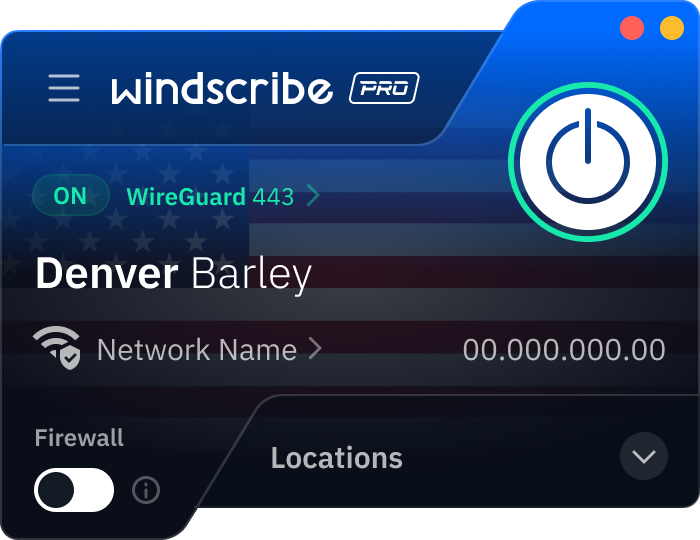
Download Windscribe, if you haven’t already. In the Windscribe app, scroll through our United States server locations and select Denver. When the big ON button turns green, your traffic is routed through our physical server in Colorado.
Are VPNs legal in Colorado?
Yes. Using a VPN is 100% legal in Denver and throughout the Centennial State. In fact, since the Colorado Privacy Act amendments took effect and the 2026 introduction of SB 26-051 regarding age attestation, more residents are using VPNs to take control of their digital data. While these laws aim to protect minors and regulate how data is processed, they do not restrict the use of encryption tools. As always, while the software is legal, it doesn't provide immunity for illegal acts.
How much do VPNs cost in Colorado?
Same as anywhere else. Most paid VPNs run about $3 to $15 per month, depending on the plan length and features. Free plans exist, but they usually have data or feature limits. At Windscribe, we value flexibility, and we offer flexible, monthly plans starting at just $3 USD per month. To get a VPN for Colorado, check out our upgrade page.
Which VPN has Colorado?
Windscribe does! We have physical 10 Gbps VPN servers located in Denver. In fact, Windscribe is the best VPN for Colorado. We offer global servers in 69+ countries and 135+ cities, solid privacy features, browser extensions with cool features like Split Personality and Cookie Monster, and a strict, independently audited no-identifying-logs policy.
Can a VPN help keep kids’ browsing more private at Children’s Hospital Colorado?
Yeah. A VPN can encrypt the connection on hospital Wi-Fi, which helps keep browsing and app traffic more private. If you turn on content blocking (like R.O.B.E.R.T.), you can also block sketchy sites, ads, and inappropriate content for a cleaner kid-safe experience.
How can a VPN help students and staff at CSU, Mines, or CU Boulder?
A VPN is super handy on campus Wi-Fi and shared networks because it encrypts your traffic and helps protect logins, email, and everyday browsing. It can also help when a network blocks certain sites. For campus-only resources (library databases, internal systems), you’ll usually still need the school’s official VPN.