



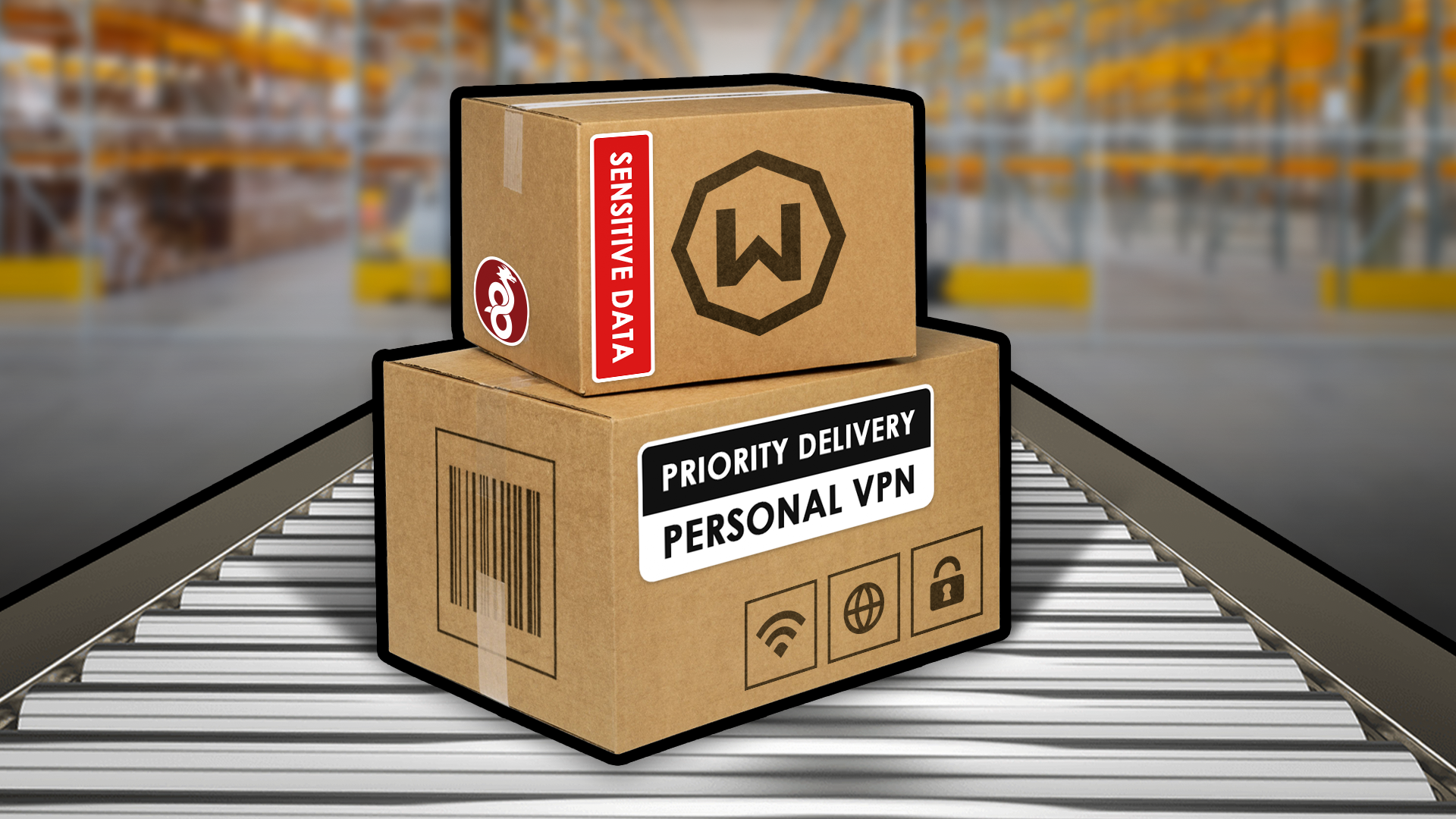
How many types of VPN are there? Well… that depends on who wrote the "Types of VPN" article you're reading. Some say two, some say four, some say six, and most of them are mixing completely different things, like connection types with types of VPN protocols. In reality, the industry has never agreed on a single classification.
We’re about to change that. So, here’s our official take: there are 6 types of VPNs. We have personal (consumer) VPN, remote access VPN, site-to-site VPN, mobile VPN, cloud VPN, and SSL VPN. Each serves a different purpose and solves a specific set of problems.
Think of it like vehicles. VPN types are the categories, like sedans, SUVs, or trucks. VPN providers are the manufacturers, like Windscribe, that build the actual product. VPN protocols are the engines under the hood, like diesel, electric, or hybrid, because they affect how the thing performs, how fast it goes, and how it handles different conditions.
In this guide, we’ll break down what each VPN type actually is, who it’s for, where it makes sense, and how not to confuse VPN type, provider, and protocol like half the internet apparently does.
Personal VPN
A personal VPN is exactly what it sounds like: a VPN for personal use. It’s an app you can download for your computer or phone, or whatever other device allows VPN apps, to protect your connection. And by “protect,” we mean “encrypt.” A VPN encrypts the traffic between your device and the VPN server, masking your IP address and protecting your activity from ISPs, advertisers, and network-level surveillance.
In plain English, this means your ISP can see that you connected to a VPN, but not what you’re actually doing inside the tunnel. So, instead of serving your browsing habits up on a silver platter, you are wrapping them in digital duct tape and sending them through someone else’s pipe.
People use personal VPNs for privacy, safer public Wi-Fi, getting around censorship, and unlocking geo-restricted content to stream shows that aren’t available in their countries (think watching The Big Bang Theory on Netflix US while you’re in Poland). Our guide covers how to use a VPN on any device once you've picked one. People often add 'P2P' VPN to this list, but it's not a formal category at all. P2P VPN explained covers the three different things the term actually refers to.
Remote Access VPN
A remote access VPN is your digital badge for accessing the virtual office. It lets one person connect to a private network from somewhere else. Home, hotel, airport, weird coworking space with beanbags, it doesn’t matter. The user runs a VPN client on their device, which creates a secure tunnel to the company’s VPN gateway. This is the classic client-to-site model: your laptop is the client, the office network is the site.
This is how remote employees, freelancers, and that one guy working from a beach in Thailand access internal file servers, sensitive databases, and specific HR portals that only work on the office Wi-Fi. It’s almost always paired with Multi-Factor Authentication (MFA) to make sure you’re actually you and split tunneling, so your boss’s server doesn't have to process your 4K YouTube playlist.
But there’s a catch. Traditional remote access was built for a world where the office was a physical building. Now that most company apps live in the cloud, tunneling into a basement in Chicago just to access a server in AWS is a recipe for laggy misery. This efficiency gap is exactly why people are starting to talk about cloud VPNs and ZTNA (Zero Trust Network Access).
Site-to-Site VPN
A site-to-site VPN is about connecting entire buildings. Think of it as a permanent digital bridge between two geographic locations. Instead of an employee manually toggling a "Connect" button on their laptop, this setup links network to network.
It’s usually handled by heavy-duty hardware like routers or firewalls that act as gateways, which is also where you run into settings like VPN passthrough. Once configured, the tunnel is always on, meaning the computers in your New York office can talk to the servers in your London branch as if they were in the same room.
Historically, companies had to pay a fortune for private, physical lines called MPLS circuits to achieve this level of connectivity. Site-to-site VPNs essentially killed that racket by allowing businesses to use the regular, public internet to create a secure, encrypted virtual private line for a fraction of the cost.
Intranet vs. Extranet Site-to-Site VPN
There are two types of site-to-site VPNs: intranet and extranet. An intranet connects multiple locations within the same company into one private network. Imagine a retail chain with 50 different stores across the country. Each store needs real-time access to a central inventory database at headquarters to track sales and stock. An intranet VPN keeps all 50 stores on one cohesive, private network so the Point of Sale systems can talk to the home office without a hitch.
An extranet VPN, on the other hand, is used when two different organizations need to share a specific resource without opening the front door to their entire digital lives. For example, a car manufacturer might set up an extranet VPN with a parts supplier.
This allows the supplier to see the manufacturer's real-time inventory levels to automate orders, but prevents them from poking around in the HR department’s payroll files or the design team’s top-secret blueprints. It’s a strictly controlled, limited-access handshake between two separate entities.
Mobile VPN
A mobile VPN is not just a VPN you install on your phone. It’s a special kind of remote access VPN built for people who are constantly on the move and cannot have their connection fall apart every time their device switches networks.
A traditional VPN often drops the second your IP changes, like when you move from Wi-Fi to cellular, pass through a dead zone, or wander into that one building where the signal goes to die. A mobile VPN is designed to keep the session alive through all that chaos, so the connection stays secure without forcing you to reconnect every five minutes like some kind of digital caveman.
That makes it useful for people like healthcare workers moving between hospital floors, law enforcement in the field, delivery drivers using route apps, and technicians updating jobs on the go. And yes, your regular VPN app on iPhone or Android still counts as a VPN, but that is usually just a personal VPN on a mobile device, not a true mobile VPN in the enterprise sense.
Cloud VPN
A cloud VPN is a VPN hosted on the cloud infrastructure instead of sitting on a box in your office rack collecting dust. It connects users, branch offices, or entire networks to cloud-based resources securely, usually through infrastructure running in AWS, Azure, or Google Cloud. In many cases, this shows up as VPN-as-a-Service, where the provider handles the gateway, encryption, scaling, and maintenance so your IT team does not have to babysit physical hardware.
This is especially useful for hybrid setups, where some resources still live on-prem, and the rest are scattered across the cloud like a bad office move. The big advantages are fast deployment, global access, and scaling without buying more gear. The downside is that you are relying on the cloud provider’s uptime, and security is still a shared responsibility.
And yes, some purists argue that cloud VPN is just a deployment model for remote access or a site-to-site VPN. Practically, the user experience and management model are different enough to warrant their own category.
SSL VPN
An SSL VPN uses SSL/TLS, the same security technology behind HTTPS websites, to create a secure remote connection. Sometimes it is treated as its own VPN type, and sometimes as just one way to build a remote access VPN. We’re giving it its own category because, in practice, it feels different to use and easier to deploy.
One of its biggest advantages is that it can often work straight through a web browser, which makes it useful for contractors, BYOD setups, and anyone who needs quick access without installing a full VPN client.
There are two main versions. An SSL Portal VPN gives you a secure webpage that acts like a front door to specific company tools. An SSL Tunnel VPN goes further and creates a broader encrypted connection, more like traditional VPN access.
Compared with IPsec VPNs, SSL VPNs are usually easier to roll out and more likely to work on locked-down networks because they use regular web traffic over port 443. IPsec is more network-heavy, more complex to configure, and often requires dedicated client software.
VPN Types Compared: Which One Do You Need?
If you’re still staring at the screen, wondering which acronym belongs in your life, this is the cheat sheet you’re looking for. This table strips away the techy stuff and breaks down the six types by their actual utility.
| VPN Type | How It Works | Best For | Setup Complexity | Typical Protocol | Example Scenario |
|---|---|---|---|---|---|
| Personal | Connects the device to a provider's server | Privacy and geo-unblocking | Low (App install) | WireGuard, OpenVPN | Watching Netflix US from a hotel in Berlin |
| Remote Access | Connects the user to a private office network | Remote work and file access | Medium | IPsec, SSL/TLS | Accessing the company HR portal from home |
| Site-to-Site | Connects two entire networks together | Branch office connectivity | High (Hardware) | IPsec | Linking a Chicago HQ to a London branch |
| Mobile | Maintains the tunnel during network roams | Field work and emergency services | Medium/High | IKEv2, Proprietary | A police officer's laptop stays connected while driving |
| Cloud | Hosted gateway for cloud-native resources | Startups and hybrid infrastructure | Medium | WireGuard, IPsec | A dev team accessing an AWS VPC securely |
| SSL | Browser-based access to specific apps | BYOD and contractor access | Low/Medium | TLS (HTTPS) | A freelancer accessing one internal app without a client |
Still not sure? Check for your specific scenario:
- If you’re an individual looking to hide your browsing from your ISP, secure your phone on public Wi-Fi, or bypass a regional blackout for a sports game, you need a personal VPN.
- If you’re an employee who needs to reach files or tools that only exist on your company’s internal servers, you need a remote access VPN.
- If you’re a business owner trying to make two separate office buildings act like they are on the same local network, you need a site-to-site VPN.
- If your job involves moving between different Wi-Fi and cellular networks and your software crashes every time the signal blips, you need a mobile VPN.
- If your company has no physical office and lives entirely in the cloud (AWS, Azure, etc.), you need a cloud VPN.
- If you need to give a contractor limited access to one specific internal web application without letting them onto your entire network, an SSL VPN is the right call.
VPN Features That Are Not Types
If you spend enough time reading VPN marketing pages, the line between a type and a feature starts to get very blurry. Some providers will try to sell you on ten different types of VPN, but half of them are just settings you toggle in an app. To keep the taxonomy clean, you need to understand that a type is the architecture, while a feature is the utility built on top of it.
Double VPN/Multi-Hop
Double VPN (or Multi-Hop) is often mislabeled as a distinct type of VPN. In reality, it’s a routing configuration. Instead of sending your traffic through one VPN server, it bounces through two. This adds a second layer of encryption and makes it even harder to trace the traffic back to you, but at the cost of significantly higher latency. You aren’t using a different type of VPN. You’re just taking the long way home for extra security.
Split Tunneling
Split Tunneling is a feature (we’ve got it!) that allows you to choose which apps go through the VPN tunnel and which go through your regular internet connection. This is very useful if you need to access local resources, like a network printer or your local banking app, while simultaneously keeping your torrent client or browser behind the VPN. It’s a tool for managing your traffic, not a fundamental shift in how the VPN itself is built.
Browser-Based VPN Proxies
Let’s be clear: a browser extension is not a VPN type. It’s a proxy. Okay? Great. While it encrypts the traffic inside your browser, it does absolutely nothing for the rest of your computer. If you have a VPN extension active in Chrome, your Zoom calls, OS updates, and Spotify stream are still leaking your real IP address to the world.
At Windscribe, we offer a powerful browser extension, but we’re the first ones to tell you that it’s a supplement to the full app, not a replacement for a system-wide VPN.
VPN Protocols: The Engines Behind Every VPN Type
If VPN types describe what gets connected and why, VPN protocols describe how that connection is secured. Think of the protocol as the engine under the hood. You can have a flashy SUV (type), but whether it runs on a high-efficiency electric motor or a chugging 1970s diesel engine (protocol) determines how fast, secure, and reliable your journey will be.
Every VPN type uses one or more of these protocols to do the heavy lifting.
WireGuard
WireGuard is the new gold standard. It’s modern, open-source, and incredibly lightweight, clocking in at around 4,000 lines of code compared to the hundreds of thousands in older protocols. Think of it as a turbocharged electric motor: it’s tiny, remarkably fast, and uses state-of-the-art cryptography to keep your data safe. Since 2020, it has become the go-to choice for personal and mobile VPNs because it doesn't drain your battery or lag your connection.
OpenVPN
OpenVPN is the battle-tested veteran. It’s been the industry standard for over two decades because it is incredibly reliable and works on almost anything. It’s the pickup truck of protocols. It’s not as sleek or fast as WireGuard, but it can haul heavy loads and drive through restrictive firewalls that block other connections. It’s great for both personal use and big business networks because, well, it just works.
IKEv2
This one’s the king of stability, developed by Microsoft and Cisco. Its superpower is a feature called MOBIKE, which handles network switches like a swift ninja. If you walk out of your house and your phone switches from Wi-Fi to 5G, IKEv2 adjusts without skipping a beat. This makes it the favorite engine for mobile VPNs and people who are constantly on the move.
L2TP/IPsec
Translation: Layer 2 Tunneling Protocol combined with IPsec for encryption. This is an older protocol that’s starting to show its age. It’s widely supported on old devices, but it’s noticeably slower because it wraps your data in two layers of encapsulation instead of one. It’s currently being phased out in favor of faster, leaner options like WireGuard. Think of it as a reliable but veeeery slow postal service that puts every letter in two envelopes.
SSTP
SSTP is a Microsoft-owned protocol that has one specific job: getting through tough firewalls. It uses the same gate that regular web traffic uses (port 443), so it’s very hard for a network admin to block it without blocking the whole internet. The only issue is that it’s basically for Windows only.
PPTP (Deprecated)
PPTP is the grandfather of all VPN protocols. It’s still around, but it’s very much retired. While it’s fast, it’s known for security vulnerabilities, which pretty much pushed it out of circulation a while ago. It has been cracked and compromised so many times that it shouldn’t be used for anything requiring actual privacy. We mention it for history's sake, but if you see it, keep walking.
Are VPNs Being Replaced? The Rise of ZTNA
The internet has been buzzing lately with statements like “VPNs are getting replaced!” or “VPNs are dead!”, which are, well… sensational at best. In reality, this whole panic is about the rise of ZTNA, or Zero Trust Network Access. Which is not a replacement for VPNs. At least, not for most types of VPNs, and definitely not for personal VPNs.
ZTNA is a security model where no user or device is trusted by default, even if it is already inside the network. Instead of dropping someone onto the whole company network, it verifies identity and device posture, then gives access to specific apps or resources one request at a time. SASE, short for Secure Access Service Edge, is the bigger cloud-based architecture that bundles networking and security together, often including ZTNA as one of its parts.
So yes, in enterprise environments, ZTNA and SASE are absolutely replacing parts of traditional remote access VPN setups, and in some cases, reducing the need for older site-to-site models too. But that doesn’t mean VPNs are dead. It means companies are getting more selective about who gets access to what.
If you’re an individual user, VPN technology is still as relevant as ever. If you’re an enterprise architect, the smarter question is how VPN and ZTNA can work together, not which one gets to wear the crown.
Where Windscribe Fits
So, where does Windscribe fall into all that? For starters, Windscribe is a personal VPN. It means that we have apps for different devices and operating systems that you can download from our official site or your app store. We’ve got apps for Windows, macOS, Linux, iOS, and Android, plus browser extensions for Chrome, Firefox, and Edge. There’s also a free tier with 10 GB a month, and if you want the full buffet, Pro gives you unlimited data.
For teams, there’s ScribeForce. That is our more business-friendly setup, with centralized billing and team management layered on top of the same Windscribe network. So if you need to wrangle multiple users without losing your mind in a spreadsheet, ScribeForce is the right solution for you.
On the protocol side, Windscribe supports six different ones, so you can switch depending on whether you want speed, compatibility, or a better shot at slipping past a network that treats the open internet like a threat. You also get features like Split Tunneling, Double Hop, R.O.B.E.R.T. for DNS-level ad and malware blocking, and a Firewall.
If any of that sounds useful, you know where to click!
Types Of VPN Frequently Asked Questions
What are the main types of VPN?
Most articles on the internet will tell you the four main types are personal, remote access, site-to-site, and cloud VPNs. However, the tech world doesn't always play by the rules, and mobile VPNs and SSL VPNs are unique enough that we consider the real count to be six. Each one handles a different job, so while four is the common answer, six is the accurate one.
What is the safest type of VPN?
Safety isn't about the type of VPN you pick, but about how it’s built and configured. For an individual, a personal VPN with a verified no-logs policy, a kill switch, and strong encryption like AES-256 is as safe as it gets. For a big business, a site-to-site VPN paired with multi-factor authentication (MFA) is the gold standard for keeping hackers out of the server room.
What is the difference between site-to-site and remote access VPN?
Think of remote access as a single person connecting “into” the office from their laptop to get some work done. A site-to-site VPN is more like building a permanent, always-on bridge between two entire office buildings so they can share everything. One is something you turn on with an app, while the other is handled by hardware and stays on 24/7.
What is the difference between SSL VPN and IPsec VPN?
An SSL VPN is a light version of a VPN because you usually access it through your web browser without needing to install special software. IPsec is the heavy-duty version that works deep in your computer's operating system and requires a dedicated app or hardware to run. SSL is great for quick access to a few apps, while IPsec is built for securing entire network connections.
Which type of VPN is best for home use?
If you’re just a regular human trying to browse the web safely, a personal VPN is your best bet. It’s designed to wrap your internet traffic in an encrypted tunnel so your ISP can’t spy on you, and hackers on public Wi-Fi can't steal your passwords. It’s simple, fast, and does exactly what you need for everyday privacy.
Is a personal VPN the same as a remote access VPN?
Nope! They look similar because they both involve an app on your device connecting to a server, but their goals are totally different. A personal VPN is about hiding your identity from the internet so you can stay private and bypass geo-blocks. A remote access VPN is about proving who you are, so your boss will let you into the company's private files.
What type of VPN does a company use?
Companies usually use a mix of several types to keep things running. They use remote access for the WFH crew, site-to-site to link their global offices together, and cloud VPNs to manage their data in places like AWS or Azure. It’s rarely just one type. Typically, it’s a stack of different tools working together.
What VPN protocol should I use?
If you want the best of all worlds, go with WireGuard because it’s incredibly fast and secure. If your network is being annoying and blocking your connection, OpenVPN is the reliable fallback that can sneak through almost anything. Use IKEv2 if you’re on a phone and moving between Wi-Fi and 5G, and see WireGuard vs IKEv2 if you want that trade-off spelled out. But whatever you do, avoid the ancient and broken PPTP protocol!


